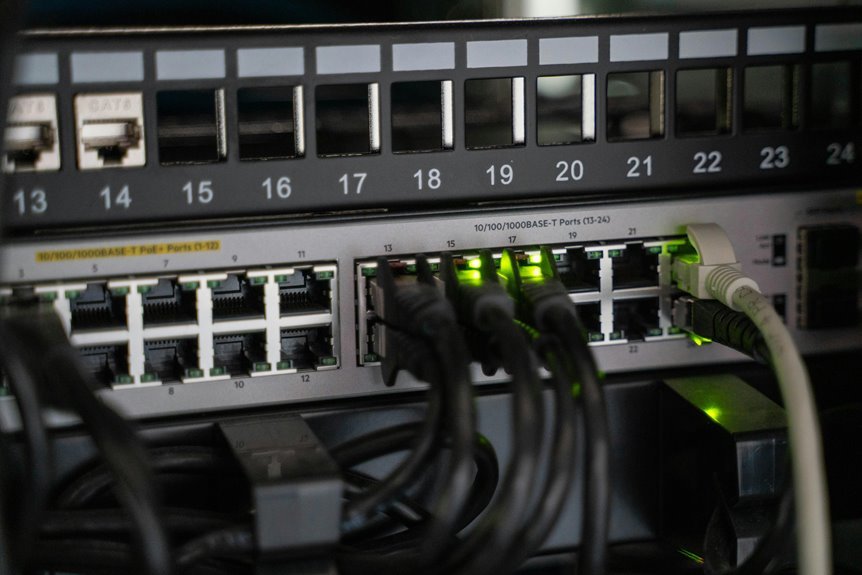

The Network Integrity Observation Report integrates validated data on endpoint 7144567720 with related devices 18778169063, 8595361357, 6025298923, and 18448238902. It highlights authenticated access, anomaly detection, and centralized credential governance, framing actionable roadmaps and timelines. A bottleneck analysis between 18778169063 and 8595361357 surfaces latency and queueing delays that require targeted remediation. The document sets governance standards and accountability, inviting scrutiny of current controls as a basis to prioritize next steps.
What Network Integrity Teaches Us About Endpoint 7144567720
Network integrity analysis of Endpoint 7144567720 reveals that consistent data validation, authentication checks, and anomaly detection underpin its stability.
The approach emphasizes disciplined network hygiene and disciplined endpoint prioritization, directing resources toward critical nodes and emergent risks.
This framework supports scalable security governance, enabling proactive responses and transparent accountability while preserving freedom to explore innovative, compliant network configurations.
The Performance Pulse: Bottlenecks Across 18778169063 and 8595361357
The Performance Pulse reveals where bottlenecks materialize between endpoints 18778169063 and 8595361357, framing a concise diagnostic of throughput constraints, queueing delays, and resource contention. This bottleneck analysis identifies latency hotspots, quantifying delay bands and inter-device waits, while isolating contributing factors.
Findings emphasize actionable paths to alleviate congestion, optimize paths, and restore balanced, freedom-friendly network throughput.
Security Posture Across All Endpoints: Gaps, Risks, and Quick Wins
How robust is the security posture across all endpoints, and where do gaps, risks, and quick wins most clearly emerge? The assessment identifies security gaps in legacy endpoints, inconsistent patching, and insufficient endpoint hardening. A formal risk assessment highlights exposure to phishing, malware, and config drift. Quick wins include baseline hardening, automated patching, and centralized credential management for improved resilience.
Actionable Roadmap: Incident Timelines, Mitigations, and Next Steps
This section outlines a concrete, time-bound action plan: incident timelines, mitigations, and forward steps tailored to close identified gaps.
The report presents incident timelines aligned with critical windows, targeted mitigations to reduce exposure, and next steps that prioritize measurable action items.
It emphasizes disciplined execution, accountability, and transparency, ensuring stakeholders track progress, verify outcomes, and sustain risk-aware, freedom-supporting operations.
Frequently Asked Questions
How Were Endpoints Selected for the Network Integrity Observation?
Endpoints were selected via a stratified criteria framework, prioritizing representative topology, critical services, and exposure risk; data collection targeted varied load profiles, while endpoint reliability was monitored to ensure consistent integrity across segments.
What External Factors Could Skew Observed Bottlenecks?
External factors can influence observed bottlenecks, though not reflect intrinsic network performance; privacy considerations limit data granularity, while endpoint data collection variability may distort results, demanding cautious interpretation and corroboration across diverse environments.
Do Data Gaps Affect the Reliability of the Report?
Data gaps reduce reliability; their presence undermines completeness, introduces uncertainty, and biases interpretations. The reliability impact depends on gap distribution and criticality of missing measurements, necessitating transparent documentation and targeted data imputation or supplementary collection strategies.
How Often Should the Roadmap Be Updated Post-Incident?
Like a steady heartbeat, updating cadence should be defined post-incident and revisited quarterly. The process ensures ongoing Stakeholder engagement, with adjustments based on incident learnings, evolving risks, and organizational agility, maintaining transparency and measurable progress.
What Privacy Considerations Accompany Endpoint Data Collection?
Privacy implications center on user consent, transparency, and minimization. The approach emphasizes data minimization, secure handling, and auditable access controls, ensuring users retain autonomy while organizations balance detection needs with lawful, ethical data practices.
Conclusion
The report closes with a precise, data-driven verdict: endpoints remain cohesive when bottlenecks are isolated and promptly remediated. An anecdote frames the cadence—like a relay race where 18778169063 hands off to 8595361357, yet a single latency spike stalls the baton. A quantified note—latency hotspots and queueing delays identified between those devices—anchors the urgency. The roadmap foregrounds timely mitigations, centralized credentials, and governance-aligned execution to sustain resilient, scalable network performance.


 By
By









 By
By