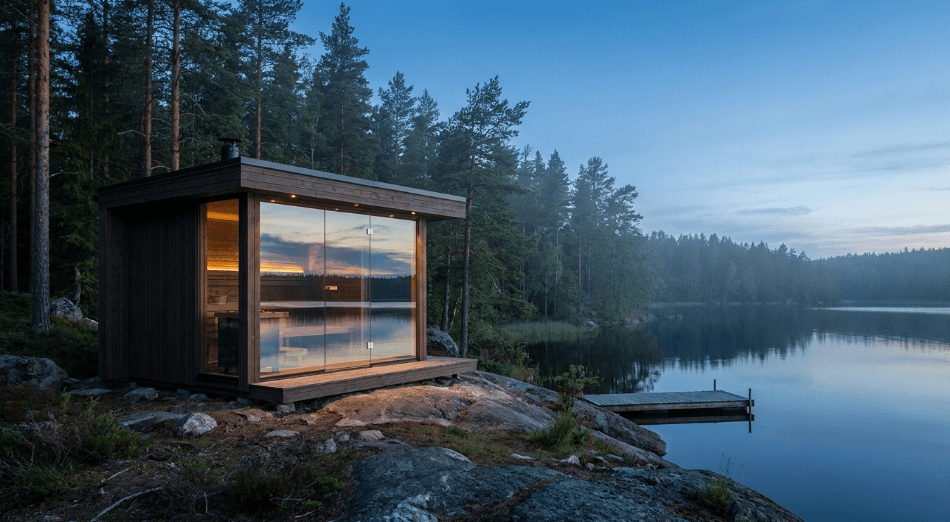

A typical electric outdoor sauna costs $14 to $20 a month in electricity for four sessions a week, based on a 6-kilowatt heater running roughly one hour per session at a U.S. average residential rate of 15 to 18 cents per kilowatt-hour. Daily use pushes that closer to $25 to $35 a month. Wood-fired units skip the power bill but run $5 to $15 in firewood per session. Either way, running costs are a small fraction of the upfront purchase, and the real monthly number depends mostly on heater size, session length, and how well the cabin holds heat.
How Is the Monthly Electric Cost Actually Calculated?
A sauna’s running cost comes down to three numbers: heater wattage, minutes of active heating, and the local electricity rate. A 6-kilowatt heater drawing full power for one hour uses 6 kilowatt-hours; most sessions do not run the heater at full output the entire time, since a thermostat cycles it on and off once target temperature is reached, so real-world draw often lands closer to 4 to 5 kilowatt-hours per hour-long session once preheat and cycling are averaged. At a national average residential rate around 16 cents per kilowatt-hour, that works out to roughly 65 to 80 cents per session, or $10 to $14 a month for three sessions a week. Rates vary significantly by state and utility, so checking an actual electric bill for the per-kilowatt-hour rate gives a far more accurate number than any national average.
How Much Does Heater Size Change the Bill?
Heater wattage is the single biggest lever on monthly cost, and it is set mostly by cabin size rather than by choice. A small one-person infrared unit might draw 1.5 kilowatts, while a four-person traditional cabin can call for 8 to 9 kilowatts to reach and hold temperature. Doubling heater capacity roughly doubles the electricity cost per session, assuming similar session length, so a larger cabin bought for occasional group use but run at the same frequency as a smaller unit will show up clearly on the electric bill. Buyers deciding between a slightly larger cabin and a smaller one should factor this into the long-term cost comparison, not just the purchase price, since the gap compounds every month for as long as the sauna is in use.
What Does Preheat Time Add to the Cost?
Preheat is the most electricity-intensive part of any session, since the heater runs at full output the entire time it is bringing a cold cabin up to temperature. A well-insulated two-person cabin typically preheats in 30 to 40 minutes; a poorly insulated or larger unit can take 50 minutes or more, which adds real cost across dozens of sessions a month. Insulation quality, door seal, and whether the unit is sheltered from wind all affect preheat time meaningfully. A cabin placed in a windy, exposed spot loses heat to the outside air faster during preheat than one tucked against a fence or wall, which is a detail worth considering during site selection, not just for comfort but for the monthly bill.
How Does Electric Compare to Wood-Fired Running Cost?
Wood-fired sauna stoves skip the electric bill entirely but are not free to run. A typical session burns through a modest armful of dry hardwood, roughly $5 to $15 worth depending on regional firewood prices and how efficiently the stove is built, plus 20 to 30 minutes of active tending rather than the largely hands-off preheat of an electric unit. For someone with access to free or cheap firewood, a wood-fired stove can end up cheaper per session than electric; for someone buying firewood at retail prices in a suburban area, electric is often the more predictable and usually cheaper option once the numbers are run side by side. Availability of a chimney and adherence to local clearance codes also factor into which option is realistic for a given property.
What Other Costs Show Up on the Monthly Bill?
Beyond the heater itself, a digital control panel or built-in timer on some models draws a small standby load even when the sauna is not in use, typically only a few watts but continuous, which adds a small amount over a full month. Outdoor units in cold climates sometimes include a low-wattage frost-protection heater to keep pipes or components from freezing in an attached cold plunge setup, which runs intermittently through winter. None of these secondary draws come close to the heater’s cost, but they explain why a careful reading of an electric bill sometimes shows a slightly higher number than the heater math alone predicts. Shops that specialize in outdoor sauna equipment, including Sweat Decks, list heater wattage clearly on product pages, which is the single most useful number for estimating a specific model’s monthly running cost before buying.
What Does the Research Say About the Value of Regular Use?
Running cost only matters relative to how much value regular use actually provides, and the research on frequency is where that case gets made. An early review in The American Journal of Medicine laid out both the benefits and the real risks of regular sauna bathing, noting cardiovascular associations alongside contraindications worth knowing about. A 2018 review in Mayo Clinic Proceedings summarized similar cardiovascular associations across the broader research base, and a 2023 follow-up review examined whether pairing sauna use with other healthy habits added further benefit. These are population-level associations, not proof that any individual’s use will produce a specific outcome. None of this changes the electricity math above, but it is a reasonable part of weighing whether $15 to $30 a month is worth spending against other household expenses, especially for people using the sauna as a consistent weekly habit rather than an occasional novelty.
Frequently Asked Questions
How much electricity does a home sauna use per session? A 6-kilowatt heater running for roughly one hour uses about 6 kilowatt-hours. At 15 to 18 cents per kilowatt-hour, that is roughly 90 cents to $1.10 per session.
What is a realistic monthly electric cost for regular use? For four sessions a week, monthly cost typically lands between $14 and $20 for a well-insulated two-person cabin.
Do sauna heaters use electricity when not actively heating? The heater draws power only while heating, but a digital control panel can draw a small standby load continuously, adding a modest amount to the bill.
Are wood-fired outdoor saunas cheaper to run than electric ones? Wood-fired units avoid the electric bill but cost roughly $5 to $15 per session in firewood, plus more hands-on time tending the fire.
References
- Benefits and risks of sauna bathing, The American Journal of Medicine, 2001
- Cardiovascular and Other Health Benefits of Sauna Bathing: A Review of the Evidence, Mayo Clinic Proceedings, 2018
- Does the Combination of Finnish Sauna Bathing and Other Lifestyle Factors Confer Additional Health Benefits? A Review of the Evidence, Mayo Clinic Proceedings, 2023

 By
By

 By
By